

In a bold move to merge decentralized finance with traditional payments, Moto has announced a $1.8 million pre-seed funding round led by Eterna Capital and CyberFund to launch what it calls "the first true onchain credit card powered by blockchain technology."
The Concept: Credit That Pays Itself
Unlike traditional credit cards where users accumulate debt and pay interest, Moto flips the model entirely. Users deposit digital assets into their Moto wallet, earn up to 5% annual yield on those deposits, and use that interest to automatically offset their monthly spending. The company markets itself as creating "your last credit card" — a self-paying system where your savings work to cover your expenses.
Moto is pleased to announce its $1.8M pre-seed round led by @eternacapital + @cyberFund_.
— Moto🪽 (@usemotocard) December 16, 2025
Introducing the first true onchain credit card, powered by @solana.
Waitlist now live. pic.twitter.com/g9VIt9HAVE
Economic Efficiency Example
A user depositing $10,000 earns approximately $41.60 per month at 5% APR, which offsets 4.2% of $1,000 in monthly spending. Over a year, this generates nearly $500 in yield that directly reduces the cost of everyday purchases.
How It Works
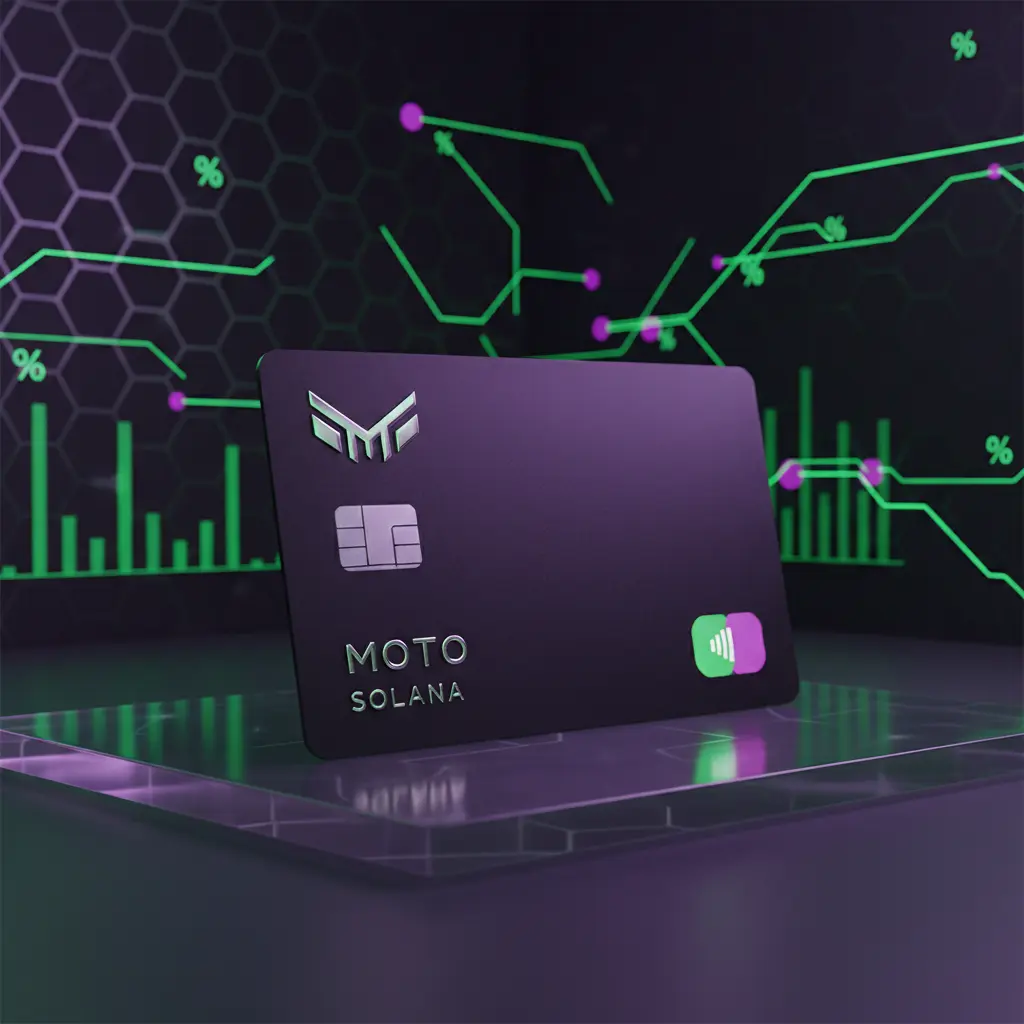
The Moto Card operates as a Visa Infinite card — Visa's most premium tier — but with a crucial difference: it's collateralized by digital assets rather than extending traditional credit. Users load their wallets with cryptocurrency, spend freely throughout the month, and have their balance automatically debited at month's end to repay any spending.
The card offers up to 5% cashback on every purchase while simultaneously earning up to 5% interest on deposits, creating what Moto calls "unprecedented capital efficiency." Users maintain access to Visa Infinite's exclusive concierge services, airport lounges, and premium experiences while their funds continue generating yield even after spending.
Three-Tier Reward Structure
Moto implements a tiered system based on deposit amounts:
- Tier 1 (0-$100K deposited): 5% cashback + 2% interest on deposits
- Tier 2 ($100K-$499K deposited): 5% cashback + 3% interest on deposits
- Tier 3 ($500K+ deposited): 5% cashback + 5% interest on deposits + exclusive perks including YouTube Premium, Spotify Premium, Financial Times, The Economist, and priority services
Strategic Timing in the Solana Ecosystem
The timing of Moto's launch aligns with explosive growth in Solana's payment infrastructure. Visa recently enabled U.S. banks to settle obligations in Circle's USDC stablecoin on the Solana blockchain, with early participants including Cross River Bank and Lead Bank. This infrastructure development reached a $3.5 billion annualized run rate as of November 2024.
Competitive Landscape Heating Up
Moto enters an increasingly crowded market of blockchain-powered payment cards. Just last week, Phantom Wallet rolled out a prepaid Visa debit card to U.S. users, allowing them to spend directly from their Phantom Cash balance backed by CASH stablecoin on Solana. However, Moto differentiates itself through its credit card model rather than debit/prepaid functionality, and its focus on high-net-worth individuals and "crypto power users" rather than mass market adoption.
The Investors Behind the Vision
The $1.8 million pre-seed round was led by Eterna Capital and CyberFund, two firms with deep roots in blockchain infrastructure. CyberFund previously backed early-stage investments in Ethereum, Cosmos, Solana, and Polkadot, and has committed to building what it calls the "cybernetic economy."
Regulatory Considerations
It's important to note that Moto is not a bank, and assets are not FDIC-insured. The card is a Visa-branded spend card where no traditional credit is extended — spending is collateralized by digital assets. This structure may help navigate regulatory complexity, but also means users bear the full risk of cryptocurrency volatility.
The company states that any cashback, yield, or benefits are not guaranteed and are conditional on meeting deposit thresholds, tier requirements, and other eligibility criteria which may change over time.
Exclusive Access Model
Unlike most crypto payment products pursuing mass adoption, Moto is launching with an invitation-only model. The company describes its target market as "a select community of entrepreneurs, tastemakers and crypto power users." The waitlist is now live at moto-card.com.
Moto's launch represents a broader trend of traditional finance and cryptocurrency convergence. As stablecoin adoption accelerates and major payment networks like Visa embrace blockchain settlement rails, products like Moto attempt to deliver the best of both worlds: the yield and transparency of DeFi with the convenience and acceptance of traditional payment cards.