

CFTC-regulated event trading meets crypto-native wallets as Phantom makes betting on real-world outcomes as easy as swapping tokens.
At Solana Breakpoint 2025 in Abu Dhabi, Phantom CEO Brandon Millman unveiled a feature that could bring prediction markets into the mainstream: native integration of Kalshi, the U.S.-regulated prediction market exchange, directly into Phantom's wallet interface. Starting immediately, Phantom's 20 million users can trade on real-world outcomes—from elections to economic data to sports—using any Solana token, without leaving their wallet.
Introducing @Phantom Prediction Markets, powered by Kalshi
— Kalshi (@Kalshi) December 12, 2025
The largest crypto wallet meets the largest prediction market.
Trading events onchain just became easier than ever. pic.twitter.com/cMloTIcsHS
Unveiling Native Prediction Markets
This isn't just another DeFi integration. It's the collision of two powerful trends: the explosive growth of prediction markets (which generated $27.9 billion in trading volume through October 2025) and the evolution of crypto wallets into super-apps that aggregate financial services into seamless interfaces.
The User Experience
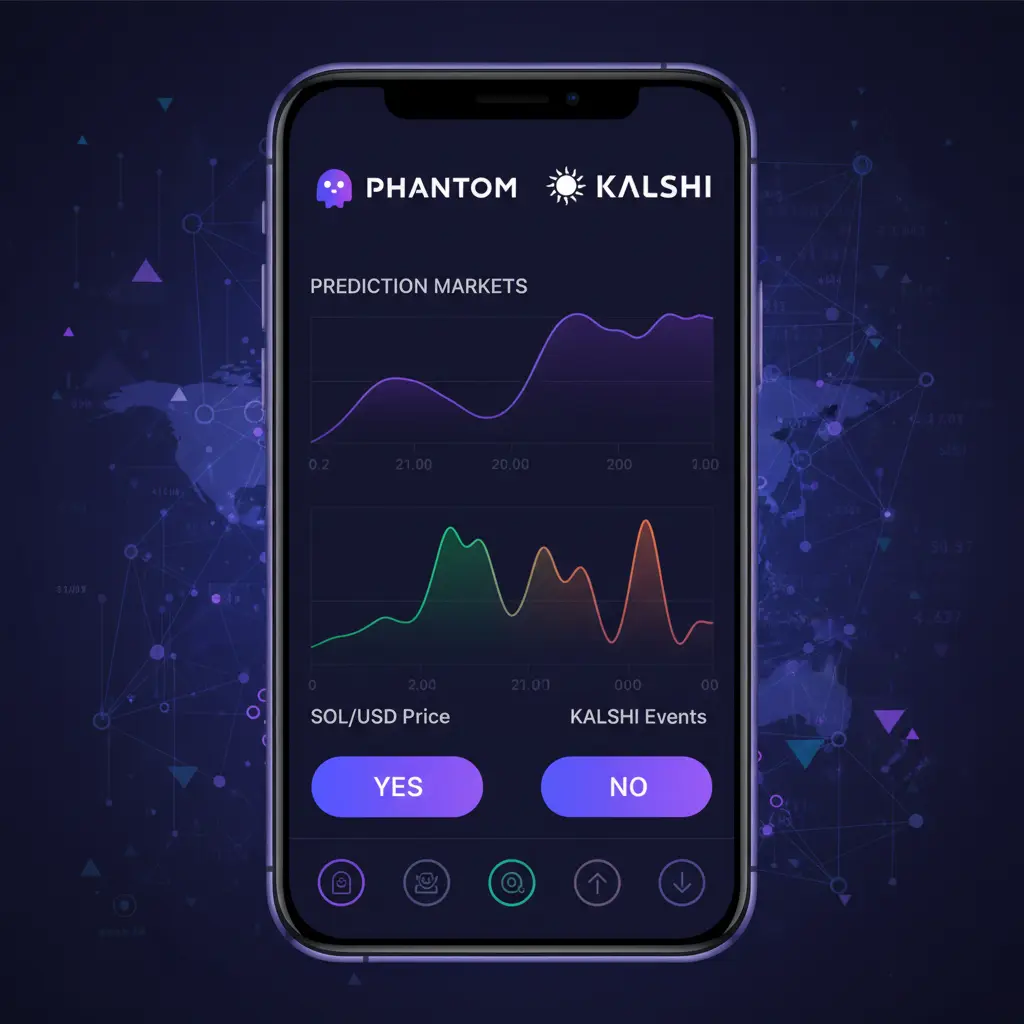
Phantom users access prediction markets through a new dedicated tab called "Phantom Prediction Markets." The interface displays:
- Real-time market discovery: Browse thousands of active markets spanning politics, crypto, sports, economics, and culture
- Live odds tracking: Watch probability shifts in real-time as information emerges and participants trade
- Instant settlement notifications: Get alerts when markets resolve and winnings become available
- Market-specific chat: Each prediction market includes a dedicated community discussion thread
Payment Flexibility
Users can purchase prediction market positions using a variety of assets, removing the need to off-ramp or bridge:
- SOL: Native Solana token
- USDC: Industry-standard stablecoin
- CASH: Phantom's own stablecoin issued by Stripe
- Memecoins: Even assets like Fartcoin (FART) are supported
Why Regulation Matters
Unlike crypto-native alternatives like Polymarket, Kalshi is a CFTC-designated contract market. This ensures institutional-grade liquidity, legal payout recognition, and built-in compliance infrastructure that satisfies legal departments at large institutions.
Technical Architecture on Solana
The Phantom integration is powered by Kalshi's recent tokenization of its markets on Solana through the DFlow Prediction Markets API. This infrastructure layer transforms traditional prediction contracts into SPL tokens.
How Tokenization Works
- User submits intent: Phantom user chooses to buy a "Yes" position on a market.
- Liquidity providers fill order: Professional market makers from Kalshi's regulated exchange fill the order using offchain liquidity.
- Token minting: DFlow protocol mints an SPL token representing that prediction position.
- Native Solana asset: The token behaves like any other Solana token—tradeable on DEXs and usable as collateral.
The Super-App Evolution
Phantom's Kalshi integration fits into a broader transformation of crypto wallets from simple asset storage into comprehensive financial platforms. By owning the interface layer, wallets maintain strategic leverage even as underlying protocols change.
The prediction market revolution won't be just about better forecasting. It'll be about making the act of forecasting accessible, social, and financially rewarding for everyone.
Market Context
Prediction markets exploded in 2025, driven by the U.S. election cycle and growing mainstream awareness. According to Crypto.com research, prediction markets generated $27.9 billion in trading volume between January and October 2025. Phantom's move positions it to capture significant value from this growing sector by lowering barriers to entry for its 20 million users.