

The cryptocurrency prediction market ecosystem is witnessing unprecedented activity as traders flock to Polymarket's hourly "Solana Up or Down" contracts. This surge in high-frequency speculation coincides with a period of intense volatility for the Solana network, driven by a massive decentralized finance exploit, shifting technical indicators, and the looming specter of Alameda Research liquidations.
The Rise of Hourly Prediction Markets
In the fast-paced world of cryptocurrency trading, traditional daily or weekly options sometimes fail to capture the immediate sentiment of the crowd during crisis events. Prediction markets like Polymarket have stepped in to fill this void, allowing users to trade shares based on the precise probability of hyper-specific future events. The "Solana Up or Down - Hourly" market for the April 5 timeframe has become a prime example of this phenomenon, generating significant trading volume and community interest.
Traders are actively speculating on the short-term price action of Solana (SOL) in highly condensed timeframes, such as between 11:00 PM ET and 12:00 AM ET. In these hourly binary markets, participants are effectively taking short-term positions on the asset's immediate price trajectory. The intense interest in this specific hourly window highlights the current unpredictable nature of the market, where traders are desperately looking for avenues to hedge against their spot positions or profit from sudden, violent price swings.
Trading Mechanics and Oracle Resolution
To participate in the "Solana Up or Down" market, traders must connect a compatible Web3 wallet to the Polymarket platform and utilize USDC, a fiat-collateralized stablecoin, to purchase shares. The platform utilizes automated market makers (AMMs) to facilitate trading and dynamically determine the odds based on real-time user activity and capital flow. For instance, a price of 50¢ for "Up" indicates that the market assigns a 50% probability to Solana finishing the hour at a higher price than it started.
If a trader purchases an "Up" share for 50¢ and Solana's price increases by the end of the hour, that share resolves to $1.00, yielding a 100% profit on the trade. Conversely, if the price decreases, the share resolves to $0.00. The resolution of these markets relies heavily on decentralized oracle networks. Polymarket typically uses the UMA (Universal Market Access) optimistic oracle to verify the final price of the asset at the exact closing time. This ensures that the outcome is based on verifiable, tamper-proof price data aggregated from established cryptocurrency exchanges, completely removing centralized points of failure.
Analyzing the Current Market Context
To fully grasp the magnitude of the capital flowing into these hourly prediction markets, one must examine Solana's current macroeconomic and localized position. According to recent data aggregation platforms, the live price of Solana is hovering around $79.09, supported by a robust 24-hour trading volume exceeding $4.3 billion. Meanwhile, localized exchange data reports a slightly higher price of $80.49, reflecting a highly contested battleground between bulls and bears.
Key Technical Metrics
Solana is currently fighting to maintain the critical $80 psychological support level. The asset remains approximately 257% below its historical all-time high of $294.87, requiring massive sustained institutional volume to reclaim those previous cycle peaks.
Historical Context: The Road Back to All-Time Highs
Despite a modest 1.71% recovery in certain trading pairs over the last 24 hours, the asset has recently faced relentless downward pressure. The current distance from the all-time high, combined with recent localized volatility, has created an environment ripe for short-term speculation. Swing traders are closely monitoring the volume profiles, noting that any failure to hold the $78 to $80 range could result in a rapid cascade down to lower liquidity pools. This precarious technical setup is exactly what makes the hourly Polymarket contracts so enticing for risk-tolerant speculators.
The Catalyst: Unpacking the Drift Protocol Exploit
The primary driver behind the recent price turbulence—and the subsequent spike in prediction market volume—is a catastrophic security breach within the Solana decentralized finance (DeFi) ecosystem. According to on-chain security analysts, the Solana-based Drift protocol suffered a severe exploit resulting in the staggering loss of approximately $286 million in digital assets.
Drift Protocol operates as a premier decentralized perpetuals exchange on the Solana blockchain, making it a foundational component of the network's DeFi infrastructure. The loss of $286 million represents a substantial drain on ecosystem liquidity and a massive hit to total value locked (TVL). Following the news of the exploit, Solana's native SOL token experienced an immediate and sharp decline of more than 5.5%. This rapid depreciation was driven by a toxic combination of retail market panic, algorithmic stop-loss hunting, and the sudden removal of liquidity from network automated market makers.
The $286 million Drift exploit is more than a financial drain; it is a severe psychological blow to the ecosystem's liquidity providers and a harsh reminder of the vulnerabilities inherent in complex smart contract architectures.
Technical Fallout from the Breach
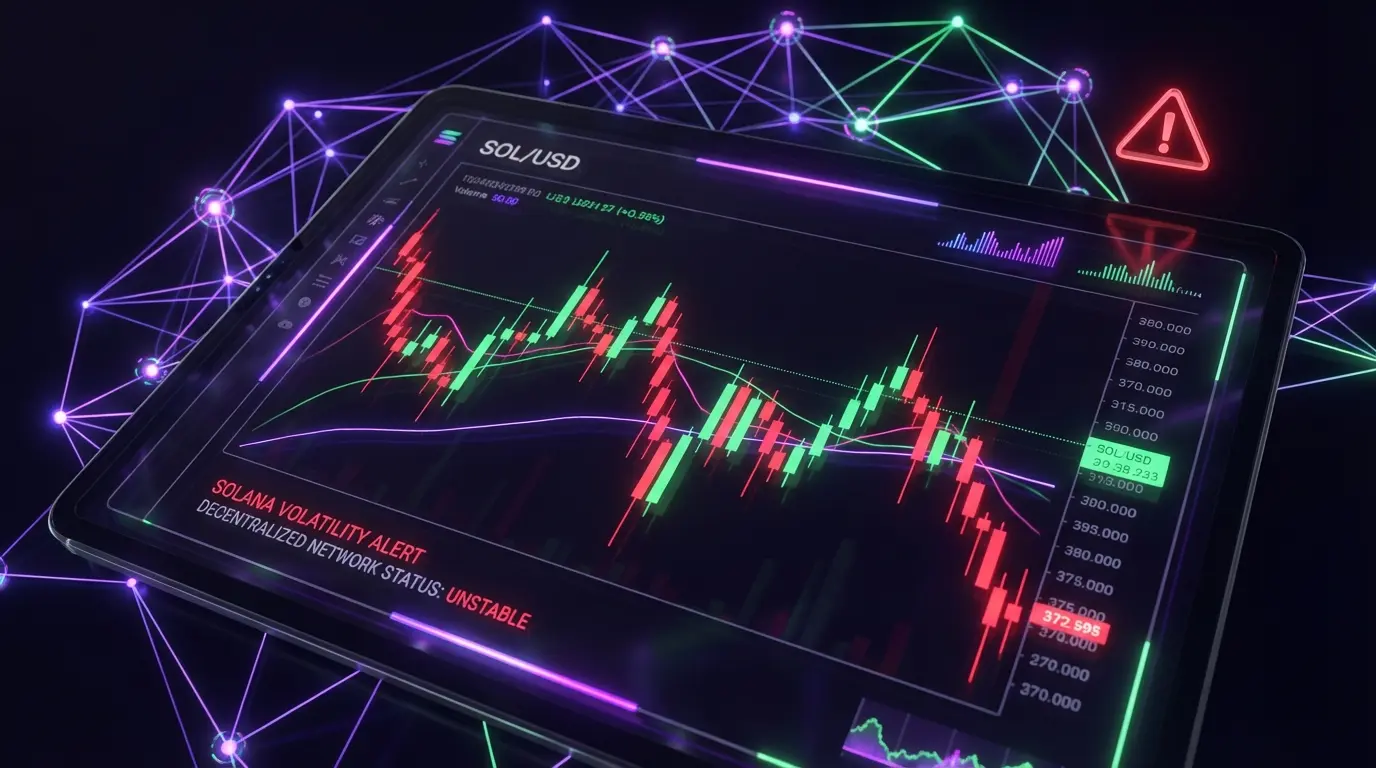
From a technical analysis standpoint, the fallout from the Drift hack has been severe. Market technicians note that following the exploit, SOL weakened significantly, dropping below its 50-day Exponential Moving Average (EMA). The 50-day EMA is a critical technical indicator used by institutional and retail traders alike to gauge short-to-medium-term momentum. Losing this level often signals a shift from a bullish or neutral posture into a defensive, bearish trend, prompting algorithmic trading bots to execute short positions, further exacerbating the downward price action.
The Alameda Research Factor: Looming Supply Overhang
Adding an additional layer of complexity to the current market dynamics are the recent on-chain movements by wallets associated with Alameda Research. On-chain sleuths recently reported that the defunct trading firm, which is inextricably linked to the spectacular collapse of the FTX exchange, moved $3.56 million in Ethereum (ETH). Alarmingly, this marks the second time in less than a month that wallets associated with the bankruptcy estate have shown signs of life.
Psychological Overhang and Supply Fears
While the recent transfer involved Ethereum, the broader implications for the Solana ecosystem are profound. Alameda Research historically held massive quantities of both locked and unlocked SOL, acting as one of the largest single entities invested in the network. Because of this historical concentration, any movement of funds by the Alameda entity tends to trigger widespread market anxiety.
These recent transfers have prompted intense discussions among market participants about a potential impending sell-off of Alameda's remaining cryptocurrency holdings to make FTX creditors whole. The fear of millions of dollars worth of additional SOL supply entering the open market via over-the-counter (OTC) desks or direct exchange dumping has contributed heavily to the bearish sentiment. This looming supply overhang is a primary reason why volume on the "Down" side of Polymarket's hourly contracts has seen such sustained activity.
Institutional Sentiment and Macro Recovery Indicators
Despite the immediate headwinds posed by the Drift Protocol exploit and the looming concerns regarding the FTX bankruptcy estate liquidations, there are underlying indicators of market resilience. Institutional confidence in Solana is showing early signs of stabilization, preventing a complete capitulation below key macro support levels.
ETF Inflows and Broader Market Resilience
This stabilization is reportedly bolstered by renewed Exchange Traded Fund (ETF) inflows into the broader cryptocurrency sector. As Bitcoin ETFs continue to absorb massive amounts of institutional capital, a "rising tide lifts all boats" effect is observed across major altcoins. Institutional investors are increasingly viewing Solana as a high-beta play on the broader crypto market's success, providing a necessary counterbalance to the localized DeFi exploits.
Furthermore, industry analysts highlight Solana's continued position as a highly functional, high-throughput open-source project. The network continues to bank on blockchain technology's permissionless nature to provide essential decentralized finance solutions. While the recent $286 million exploit presents a significant hurdle, the underlying consensus mechanism and base-layer infrastructure of the network remain fully operational and uncongested.
Navigating the Volatility
As the hourly contracts resolve and new ones open, the prediction market frenzy serves as a fascinating real-time barometer for Solana's ecosystem health. Traders and investors alike must remain hyper-vigilant, balancing the localized risks of DeFi exploits and bankruptcy liquidations against the broader macroeconomic tailwinds of institutional adoption. Whether Solana reclaims its bullish momentum or succumbs to further technical breakdowns, the hourly battles on platforms like Polymarket will continue to provide an unfiltered look into the psychology of the modern crypto trader.