
In a defining moment for blockchain governance, Solana co-founder Anatoly Yakovenko has drawn a sharp line in the sand regarding network evolution, contrasting Solana's aggressive upgrade strategy against Ethereum's stability-focused vision.
The Great Philosophical Divergence
The cryptocurrency industry is currently witnessing a fundamental clash of ideologies regarding the future of Layer 1 protocols. At the center of this discourse is Solana Labs co-founder Anatoly Yakovenko, who has articulated a development philosophy that stands in stark contrast to the trajectory of the industry's largest smart contract platform, Ethereum.
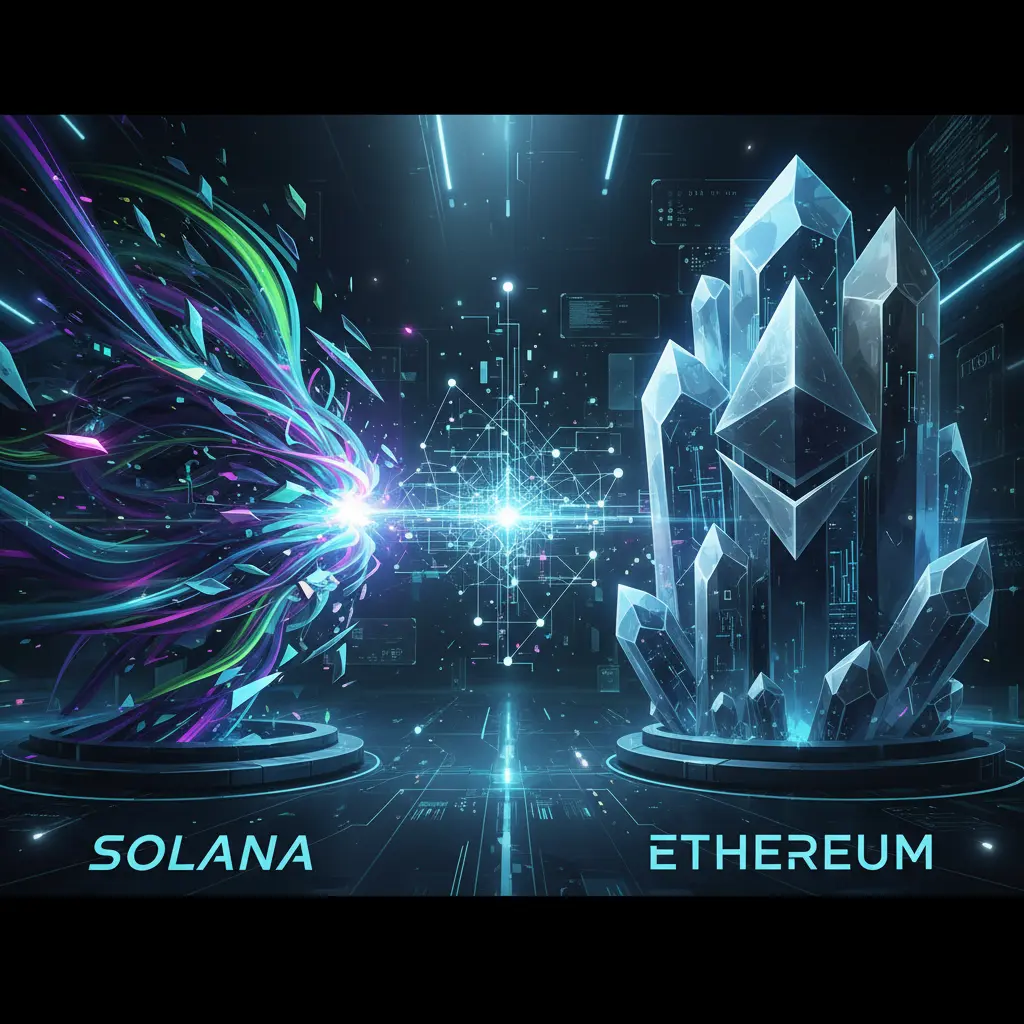
Yakovenko's recent statements emphasize a critical imperative: high-performance blockchains must continuously evolve or face obsolescence. This perspective directly challenges the concept of a "longevity benchmark" recently floated by Ethereum co-founder Vitalik Buterin. While the Ethereum roadmap increasingly points toward a future where the base layer becomes a finished, immutable infrastructure—similar to how TCP/IP serves the internet—Yakovenko argues that such calcification is a death sentence in a rapidly innovating technology sector.
The Core Conflict
Vitalik Buterin envisions a blockchain that eventually requires minimal human intervention, prioritizing stability and decentralization. Anatoly Yakovenko argues that stagnation poses an existential threat, advocating for a protocol that remains agile and responsive to user demands.
The 'Adapt or Die' Imperative
Yakovenko's "adapt or die" mentality is rooted in the belief that software which fails to address the immediate, practical problems of its ecosystem participants loses its utility. In the hyper-competitive market of decentralized networks, utility is the primary driver of value. If a network cannot iterate quickly enough to support the throughput, latency, and feature requirements of modern developers, it risks being bypassed by newer technologies.
This philosophy frames protocol upgrades not merely as optional enhancements or quality-of-life improvements, but as a survival mechanism. Yakovenko suggests that while core teams should exercise discipline—rejecting the majority of feature requests to maintain focus—the protocol itself must remain mutable. It must be capable of absorbing technological breakthroughs, whether in cryptography, networking, or hardware optimization, to maintain its performance edge.
The Role of AI and Economic Sustainability
Looking beyond the immediate horizon, Yakovenko has outlined a forward-thinking vision where artificial intelligence (AI) plays a pivotal role in protocol development. The integration of AI-assisted coding tools could fundamentally alter the velocity of blockchain upgrades. By leveraging AI to accelerate the implementation of improvements, the Solana ecosystem aims to tighten its iteration cycles, deploying optimizations faster than competitors who rely solely on traditional human-speed development processes.
If a network fails to address practical problems for its ecosystem participants, it loses utility and, subsequently, relevance. Stagnation is not an option.
This technological integration dovetails with Yakovenko's economic theory for the network. He proposes a future where transaction activity generates sufficient economic value to sustain continuous network improvements. In this model, the fee structure could evolve to directly support the developers contributing to the protocol's upgrades. This creates a self-sustaining flywheel: better performance attracts more usage, which generates more fees, which funds further development, leading to even better performance.
Decentralizing the Client Layer
A critical component of this evolutionary strategy is the decentralization of the development process itself. Yakovenko has signaled that for Solana to mature, it must reduce its reliance on Solana Labs. The network is actively moving toward a multi-client future. The development of the "Firedancer" validator client by Jump Crypto and contributions from Anza are prime examples of this shift. By diversifying the software that runs the network, Solana aims to eliminate single points of failure while fostering a competitive environment for protocol innovation.
RWA Growth and On-Chain Metrics
While the philosophical debate provides the theoretical framework, on-chain data offers the empirical evidence of Solana's growing utility. The network has achieved a significant milestone in the Real-World Assets (RWA) sector, with market capitalization surpassing the $1 billion mark. This surge is not merely a vanity metric; it represents a validation of Yakovenko's emphasis on solving practical problems.
The influx of RWAs—ranging from tokenized treasury bills to private credit—demonstrates that institutional players are finding value in Solana's high-throughput, low-latency environment. These financial applications require a network that can handle high-frequency transactions without congestion, a requirement that necessitates the continuous upgrades Yakovenko advocates for. As these high-value transactions increase, they provide the necessary stress testing for the network's economic model, proving that utility drives value capture.
Market Analysis: Price Action and Technical Outlook
Turning to the financial markets, Solana’s native token (SOL) is navigating a complex technical landscape. Currently trading near $142, the asset has shown resilience despite recent volatility. While daily fluctuations have seen minor pullbacks, the weekly performance remains positive with a gain of over 4.5%, indicating underlying accumulation.
Key Resistance and Support Levels
Market analysts are closely monitoring the technical setup following SOL's recent recovery. According to analysis from INSIDER, the chart structure supports a bullish local outlook. A critical development has been the break of a weekly downtrend line, a technical signal that often precedes a trend reversal. Traders and analysts are now eyeing the $160 to $170 range as the primary area of interest. This zone represents a "supply block" where previous selling pressure halted rallies, making it the next logical target for bulls to test.
The Ethereum 2020 Fractal
In a compelling historical comparison, crypto analyst curb.sol has drawn parallels between Solana’s current price action and Ethereum’s market cycle prior to its 2020 breakout. The analysis highlights that SOL has been consolidating within a wide range of $100 to $200 for an extended period, mirroring Ethereum's base formation between 2019 and 2020.
If this fractal plays out, the implications for long-term holders are significant. The analyst reiterated a long-term price target of $1,000, contingent on the network maintaining its growth trajectory and successfully executing its upgrade roadmap. However, in the short term, risk management remains key. Support zones around the $100 psychological level serve as the invalidation point for the bullish thesis, should broader macroeconomic conditions deteriorate.
Ultimately, Yakovenko’s vision suggests that the price of the asset is a lagging indicator of the network's utility. By focusing on aggressive upgrades, AI integration, and practical utility for sectors like RWAs, Solana aims to secure its position not just as a speculative asset, but as the underlying infrastructure for the future of finance.