

At Solana Breakpoint 2025, Solflare announced Magic AI—a conversational assistant that fundamentally changes how users interact with crypto wallets. Instead of clicking through menus, navigating settings, and manually configuring trades, users simply describe what they want in plain English.
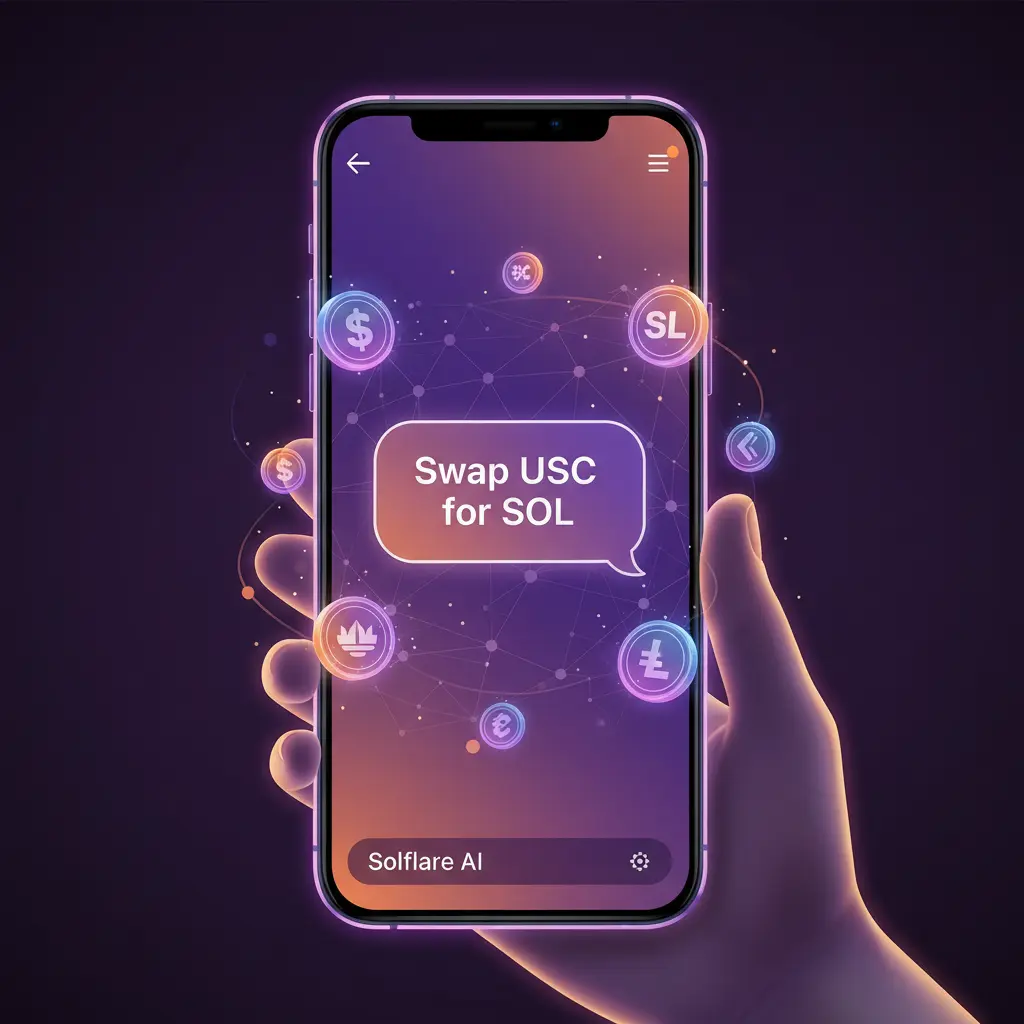
This isn't a chatbot answering questions about crypto. This is intent-driven infrastructure that transforms natural language into on-chain transactions—enabling conditional orders, social sentiment analysis, automated DeFi strategies, and market research without requiring users to learn wallet interfaces or DeFi protocols.
If successful, Magic could eliminate the most persistent barrier to crypto adoption: complexity. Instead of forcing users to think like software engineers, wallets can finally work the way humans actually think—in goals and conditions, not functions and parameters.
The UX Problem: Crypto Wallets Built for Developers
The crypto industry has a usability crisis. Despite billions in venture capital, millions of users, and credible institutional adoption, the actual user experience of self-custody crypto remains barely accessible to anyone outside the technical elite.
User Abandonment Statistics
Industry data reveals 60-70% of users abandon wallet setup before completion, and approximately 40% never make a second transaction. Most users interact with fewer than three DeFi protocols despite hundreds being available.
The Current Wallet Experience
To execute a simple conditional trade, users currently must navigate swap interfaces, select tokens manually, search for limit order functionality, and set up separate alert services. For DeFi yield optimization, the process involves manually researching lending protocols, comparing APYs, and constantly monitoring rates.
This isn't a feature problem—it's an interface paradigm problem. Wallets are built like developer tools because they were originally built by developers for developers. The shift from technical to mainstream adoption requires a shift from menu-driven to intent-driven interaction.
Solflare's Solution: Intent-Driven AI Architecture
Magic AI represents Solflare's bet that the future of wallet UX isn't better menus—it's no menus. Instead of teaching users how wallets work, teach wallets how humans think.
How Magic Works: The Two-Layer Architecture
Layer 1: AI Intent Interpretation uses large language models trained on crypto terminology to understand natural language requests. Layer 2: Solver Network Execution uses pre-built, audited smart contract functions to execute the intent securely.
We are not using AI to basically do everything on its own. We are just using AI to figure out what your intent is, and then we're executing it by a set of functions that we have built in the background.
This separation is crucial for security: AI interprets, deterministic code executes. The unpredictability of AI doesn't touch actual transaction construction or signing.
Example Interactions
- Conditional Trading: "Swap all my USDC for SOL when SOL falls below $150"
- Social Sentiment Analysis: "What's the sentiment around $BONK on Twitter?"
- DeFi Yield Optimization: "Find me the best lending rate for my USDC"
Alpha Release Features: What's Available Now
Solflare launched Magic's alpha version the same week as Breakpoint (December 13, 2025), with an initial feature set focused on core trading and research capabilities.
- Natural Language Interaction: Text-based commands with context retention.
- Market Insight Generation: Token analysis, protocol research, and comparative analysis.
- Social Signal Analysis: Monitoring platforms like X (Twitter), Reddit, and YouTube for sentiment scoring and volume trends.
- Automated Trade Execution: Support for price-based triggers, time-based triggers, and combined conditions.
Security Architecture: AI + Self-Custody
The core challenge of AI-powered wallets is giving AI enough capability to be useful without giving it enough access to be dangerous. Solflare's security model ensures that AI never touches private keys. Keys remain in Solflare's self-custodial architecture, maintaining the same security model as the standard wallet.
Magic constructs transactions, but the user must review and sign every transaction. A clear transaction preview system displays token amounts, destination addresses, and estimated gas costs before execution.
The Competitive Landscape: AI Wallets Emerging
Magic isn't alone in recognizing the opportunity for AI-powered wallet UX. Competitors like Armor Wallet, Rasper AI, and Coinbase Wallet are racing to build similar capabilities.
Magic's Competitive Positioning
Solflare holds distinct advantages with its established user base of over 4 million active users and its deep integration with the Solana ecosystem. The use of a Solver Network for pre-built infrastructure allows for automated execution while maintaining conservative security standards.
Use Cases: Who Benefits Most
- Active Traders: Never miss key price movements during sleep or work.
- DeFi Yield Farmers: Maximize yield without constant manual monitoring.
- Social Sentiment Traders: Leverage data-driven sentiment analysis instead of gut feel.
- Crypto Beginners: Access sophisticated strategies with a plain-language interface.
The Roadmap: Where Magic Is Heading
Based on Solflare's announcements, the development trajectory includes near-term DeFi integration with protocols like Kamino and Solend, followed by visual analytics and advanced technical indicators. Medium-term plans involve a strategy marketplace for sharing prompts and airdrop automation. Long-term goals include cross-chain expansion to Ethereum and Polygon, and potentially an autonomous agent mode.
Conclusion: From Menus to Conversations
Solflare Magic AI represents a calculated bet that the future of crypto wallets looks nothing like their present. Not better buttons, not clearer menus, not more comprehensive tutorials. Just conversation.
For crypto to reach billions, it needs to work this way. The technical sophistication can't disappear—blockchains will always have gas fees, MEV, and slippage. But the user shouldn't need to think about these things, just as email users don't think about SMTP protocols. If Magic succeeds, it won't just be a feature for Solflare users. It will be the template for how every crypto wallet works.