

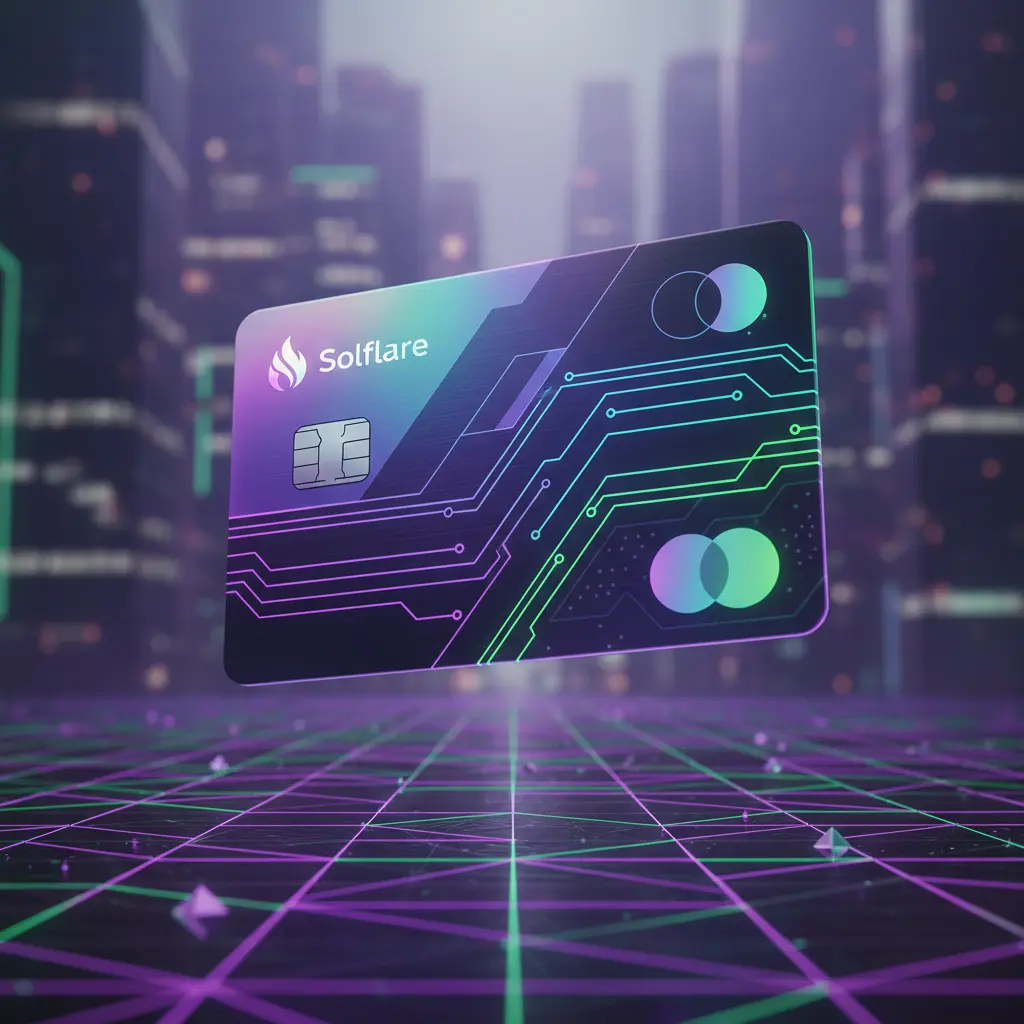
In a significant milestone for decentralized finance integration, Solflare has partnered with Mastercard to launch the first self-custody debit card for the Solana ecosystem. This product release creates a direct bridge between on-chain assets and real-world spending, even as the native token SOL faces continued bearish pressure.
Bridging the Gap Between DeFi and Daily Spending
Solflare, a leading wallet provider in the Solana ecosystem, has introduced a groundbreaking financial tool designed to give users autonomy over their assets while enabling global utility. The new self-custody debit card connects directly to the user's non-custodial Solflare wallet, eliminating the need for third-party intermediaries typically associated with crypto cards.
Unlike traditional crypto debit cards that require users to top up a custodial account, the Solflare card utilizes holdings directly from the wallet. This ensures that users maintain full control of their private keys and funds until the exact moment of transaction. The integration supports instant settlement using USDC (USD Coin) across Mastercard’s extensive global merchant network.
Key Security and Usability Features
The card prioritizes security through a multi-layer authentication process. Users must approve every payment via biometric checks (FaceID or fingerprint) and PIN confirmation directly within the mobile app. This creates a banking-grade security environment while preserving the decentralized nature of the underlying assets.
Global Rollout and Adoption Metrics
The launch strategy focuses initially on the United Kingdom and the European Economic Area (EEA), with plans to expand into other global regions shortly. Recognizing the dominance of mobile payments, Solflare has ensured immediate compatibility with Google Pay, allowing for tap-to-pay functionality at millions of terminals worldwide. Support for Apple Pay is scheduled to follow in the coming updates.
Demand for the product has been robust. According to Solflare, more than 115,000 users signed up for early access to the card. This high level of interest underscores a shifting consumer sentiment in the crypto space: users are increasingly looking for ways to utilize their digital assets for everyday purchases rather than treating them solely as speculative investments.
Market Analysis: SOL Price Diverges from Fundamental Growth
Despite the bullish news regarding infrastructure and utility, the price action of Solana’s native token, SOL, has remained lackluster. The token has extended its weekly losses, sliding approximately 14% over the last seven days to trade near the $132 mark. This creates a stark contrast between the ecosystem's technological maturation and its current market valuation.
The launch represents a massive step forward for utility, yet the market remains fixated on broader macroeconomic headwinds and technical weakness.
Technical Indicators and Liquidity Zones
Market analysts suggest that the recent decline has served a technical purpose. Analyst TedPillows noted that the drop has likely swept out significant downside liquidity, potentially exhausting sell pressure at these lower levels. This "flush" often precedes a stabilization period or a reversal.
Looking at the order books and liquidity maps, strong clusters of interest reside to the upside. Specifically, the zones between $170 and $200 hold significant liquidity that could act as a magnet for price if market sentiment shifts. Currently, SOL is attempting to find a stable floor between $135 and $145.
Outlook for Traders
Traders are now monitoring the $132 support level closely. A successful defense of this area could trigger a relief bounce toward $160. However, if the broader crypto market weakness persists, the token may need to test deeper liquidity bands near $120 before a sustainable recovery can begin.