
The highly anticipated launch of Trove (TROVE) has turned into a chaotic market event, resulting in a catastrophic 95% loss in value within minutes of trading, fueled by a last-minute blockchain migration and disputes over millions in retained investor funds.
The Anatomy of a Market Collapse
In what is developing into one of the most contentious token launches of the year, Trove Markets has faced an immediate and severe backlash from the cryptocurrency community. The project, which raised significant capital through an Initial Coin Offering (ICO), saw its native token, TROVE, disintegrate in value moments after order books opened. Market data indicates that the asset shed approximately 95% of its valuation almost instantly, leaving early backers with heavy losses and little recourse.
This volatility was not merely a result of standard market fluctuations but appears to be a direct reaction to a fundamental alteration in the project's roadmap. Just days before the Token Generation Event (TGE), the development team announced a pivot that nullified the central premise of their fundraising campaign: a migration from the Hyperliquid network to the Solana blockchain.
Launch Day Metrics
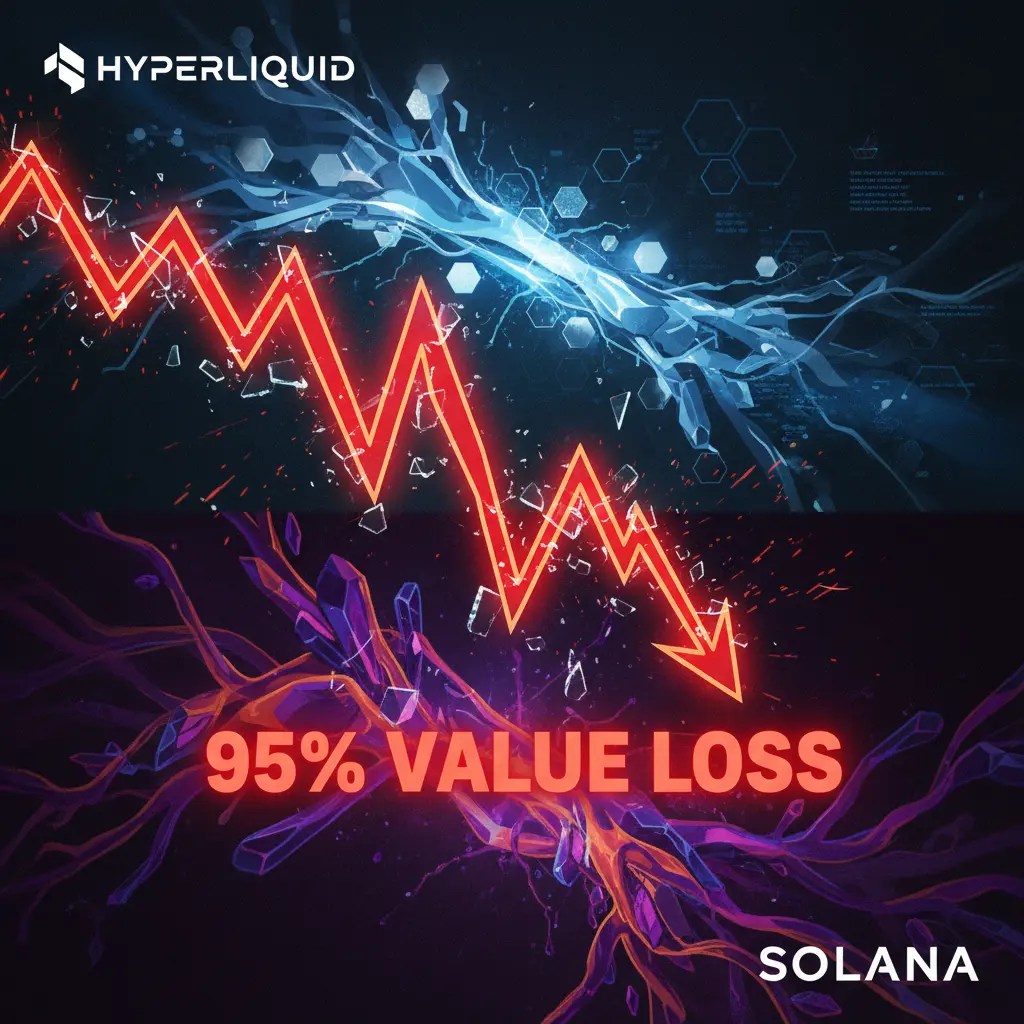
The TROVE token collapsed by 95% within the first hour of trading. Despite raising $11.5 million from investors, the team confirmed the retention of approximately $9.4 million for development on a different chain than originally promised.
The Controversial Pivot: Hyperliquid to Solana
The core of the controversy lies in the bait-and-switch nature of the infrastructure choice. Trove Markets had aggressively marketed itself as a premier Perpetual Decentralized Exchange (DEX) specifically designed for Hyperliquid. Hyperliquid is known as a high-performance Layer 1 blockchain optimized for decentralized finance, offering specific throughput and liquidity advantages that appealed to a niche set of sophisticated DeFi investors.
Less than a week before the token was set to launch, the team announced a sudden strategic pivot to Solana. While Solana is a robust and popular high-throughput blockchain, the sudden change left investors who had committed capital based on the Hyperliquid thesis in a precarious position. The capital was raised for a specific product on a specific chain, and the unilateral decision to migrate effectively rendered the original investment thesis void mere days before liquidity was provided.
Rationale Behind the Switch
The explanation provided by the Trove team has done little to quell investor anger. A builder for the project, known pseudonymously as "Unwise," cited the withdrawal of a critical strategic liquidity partner as the primary driver for the migration. According to public statements, this partner was essential for the Hyperliquid integration, and their departure made the original roadmap unfeasible.
The team framed the move to Solana as a necessary survival strategy to ensure a product could still be delivered. However, critics argue that such a fundamental dependency on a single partner highlights a lack of robust planning and risk management, the cost of which is now being borne by retail investors.
The $11.5 Million Discrepancy
Beyond the technical migration, the handling of the project's treasury has ignited fierce debate regarding fiduciary responsibility in the unregulated crypto sector. Reports indicate that Trove Markets raised approximately $11.5 million during its public sale. Following the pivot, the team confirmed they would retain roughly $9.4 million of these funds to build the new iteration of the platform on Solana.
Retaining 80% of raised capital after changing the fundamental product delivery mechanism without a governance vote is being labeled by many in the community as a breach of trust.
The team has outlined that these retained funds are allocated for operational necessities, including developer salaries, backend infrastructure, and marketing initiatives. They argue that without this capital, the project would cease to exist. However, investors contend that if the project cannot be built as sold, the ethical course of action would be a full refund rather than a forced participation in a new, unvetted venture.
Allegations of Mismanagement and "Rug Pull" Rhetoric
The combination of the sudden pivot, the massive price crash, and the retention of funds has led to accusations of a "soft rug pull." In crypto terminology, this refers to scenarios where developers do not outright steal funds and disappear, but rather materially change the terms of engagement or deliver a sub-par product after securing capital, effectively devaluing the investment while keeping the money.
On-Chain Anomalies
Adding fuel to the fire, independent blockchain analysts have flagged suspicious on-chain activity. Reports suggest that a significant portion of the TROVE supply is controlled by a single entity across multiple wallets, funded by the same exchange within a short timeframe. While there is no definitive proof linking these wallets to the Trove team, the concentration of supply raises concerns about potential market manipulation and the integrity of the token distribution.
Legal Threats and Community Mobilization
The fallout has moved beyond social media venting to potential real-world consequences. Dissatisfied investors are organizing on governance forums and messaging apps, with discussions turning toward class-action lawsuits. The argument for legal recourse hinges on the premise that funds were solicited for a specific purpose (Hyperliquid development) and were misappropriated for another (Solana development) without donor consent.
Trove has acknowledged the erosion of trust, admitting that communication regarding the shift was mishandled. While they have promised automatic refunds for certain user groups, the lack of clarity regarding who qualifies and the timeline for these refunds continues to drive negative sentiment.
Broader Implications for DeFi Investing
The Trove debacle serves as a stark reminder of the risks inherent in Initial Coin Offerings and presales, particularly those run by pseudonymous teams. It highlights the fragility of investor protections in the DeFi space, where smart contracts enforce code but cannot enforce promises or roadmaps.
As the project attempts to rebuild its reputation on Solana, the market remains skeptical. The token continues to trade significantly below its offering price, and the "Unwise" team faces an uphill battle to demonstrate that the pivot was a genuine attempt to save the project rather than an exit strategy disguised as a pivot.