
A fierce debate regarding the structural integrity and decentralization of the Solana blockchain has erupted following viral allegations of a massive validator exodus, prompting a detailed technical rebuttal from the network's leadership.
The Anatomy of the Validator Controversy
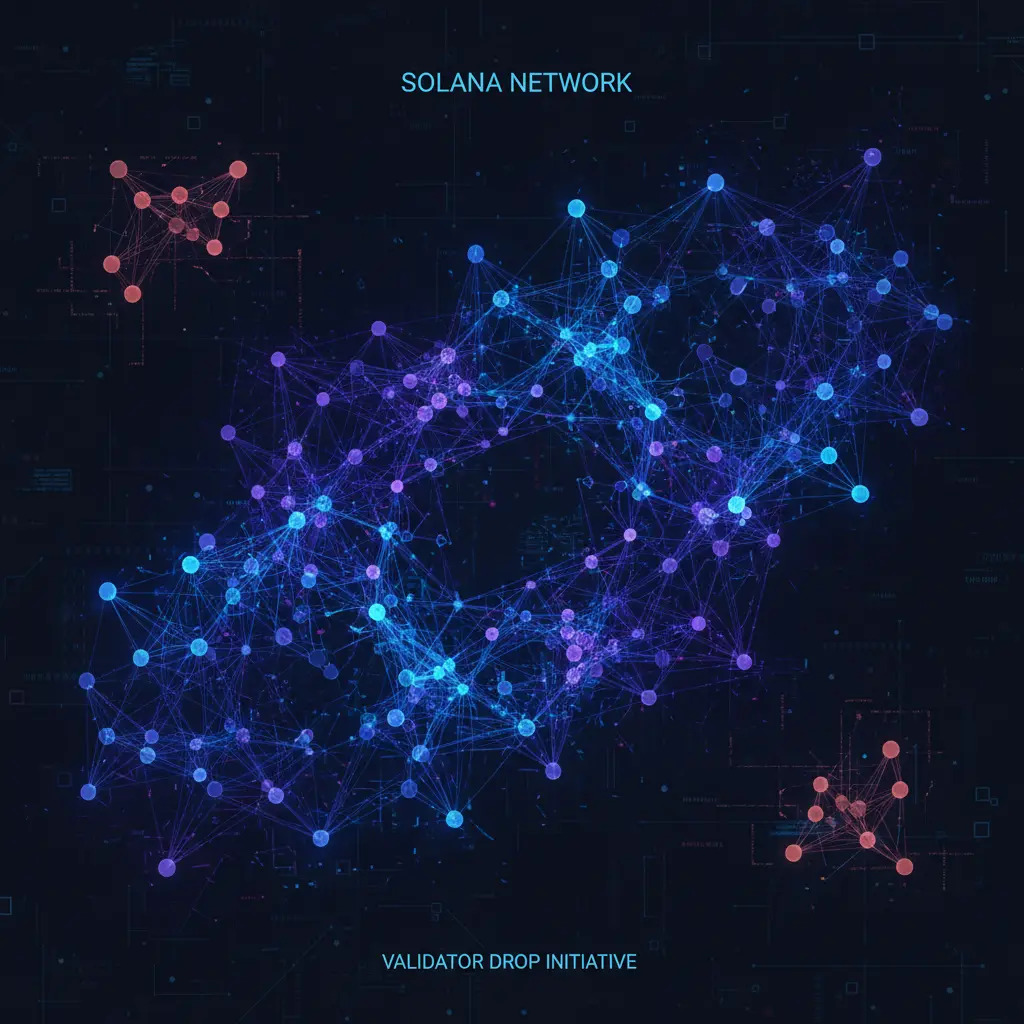
The cryptocurrency ecosystem is no stranger to heated debates regarding centralization, but recent discourse surrounding Solana has reached a fever pitch. Over the weekend, social media platforms were inundated with viral posts alleging a catastrophic decline in the Solana network's security infrastructure. The central claim suggested that the blockchain had lost a staggering 84% of its validators, a figure that, if true, would imply a critical failure in the network's ability to maintain censorship resistance and operational stability.
These allegations immediately sparked concern among retail investors and institutional stakeholders alike. In the world of Proof-of-Stake (PoS) blockchains, the validator set is the lifeblood of the network. A drastic reduction in these participants could theoretically make the network more susceptible to collusion, attacks, or centralized control. However, as the narrative gained traction, key figures within the Solana ecosystem stepped forward to challenge the veracity of the data being presented.
Yakovenko's Rebuttal: Contextualizing the Data
Anatoly Yakovenko, the co-founder of Solana, issued a direct and comprehensive response to the viral claims. He characterized the 84% figure as a gross misinterpretation of network dynamics and node classifications. According to internal data and network monitoring tools, the actual decline in validator participation over the trailing 12-month period is approximately 20%—a figure significantly lower than the alarmist statistics circulating online.
Data Discrepancy Insight
While viral posts claimed an 84% drop, official network data indicates a 20% reduction. This discrepancy largely stems from conflating different types of network participants and ignoring the scheduled conclusion of incentive programs.
Yakovenko emphasized that raw numbers often fail to tell the complete story of a blockchain's health. The reduction in numbers, he argued, does not represent a fundamental failure of the protocol or a loss of faith by the community. Instead, it reflects a maturation phase where the ecosystem's incentive structures are shifting from subsidized growth to sustainable, organic participation. While some independent financial analysts have pointed to a validator drop of roughly 68% over a longer three-year horizon, Yakovenko’s rebuttal was specifically targeted at the recent 12-month timeframe and the hyperbolic 84% figure that had induced market anxiety.
The Subsidy Effect: The End of the SFDP
To understand the decline in validator nodes, one must look at the economics of the Solana Foundation Delegation Program (SFDP). This initiative was designed as a strategic bootstrap mechanism to foster early network growth. By providing subsidies to cover the voting costs for smaller validators, the foundation effectively lowered the barrier to entry, allowing enthusiasts and smaller operators to participate in consensus without bearing the full brunt of operational expenses.
The program was never intended to be permanent. It served as a one-year on-ramp to help the network achieve critical mass. As planned, the SFDP has concluded, and with it, the financial support for specific nodes has ceased. Consequently, a portion of the validators that were economically viable only due to these subsidies have exited the network. This "churn" is viewed by proponents not as a crisis, but as a necessary step toward a truly decentralized market where validators operate based on genuine economic utility rather than artificial support.
The transition away from subsidized participation filters out operators solely reliant on grants, leaving a more robust core of committed validators who are invested in the long-term success of the protocol.
Technical Nuance: Validators vs. Full Nodes
A significant portion of the confusion driving the current debate stems from a misunderstanding of technical terminology—specifically, the distinction between "validators" and "full nodes." Yakovenko argued that the viral claims conflated these two distinct categories to create an inflated narrative of network contraction.
In the Solana architecture, validators are nodes that participate in consensus by voting on blocks. Full nodes, however, play a different but equally critical role: they maintain the complete ledger history and serve data to the rest of the network. "Validators are not full nodes," Yakovenko clarified in his response. While the number of voting validators may have fluctuated due to economic shifts, the infrastructure remains robust.
Comparative Network Health
To provide context, Yakovenko drew a comparison to Ethereum, the largest smart contract platform by market capitalization. Ethereum currently maintains roughly 8,300 full nodes. Solana, despite being a younger network with a market capitalization approximately four times smaller than Ethereum's, operates approximately 5,000 full nodes. This comparison suggests that Solana's node density is remarkably high relative to its market size and age, countering the narrative that the network is centralized or lacking in infrastructure.
The Cost Barrier and Financial Reality
Beyond the node count, the debate has reignited discussions regarding the financial barriers to running a Solana validator. Critics have long argued that the high hardware requirements and voting costs act as a centralizing force, excluding retail participants and favoring institutional entities.
One particularly sensational claim alleged that operating a Solana validator requires $20 million in capital—a figure that was swiftly debunked by the community. However, the reality, while far cheaper than $20 million, is still significant. Operating a self-hosted, fully validating Solana node requires high-performance hardware, with costs starting in the hundreds of dollars and scaling up depending on throughput requirements.
The Voting Cost Challenge
The more pressing economic hurdle is often the ongoing operational expense of voting. In Solana's high-throughput consensus model, validators must submit vote transactions to the network, incurring fees for every block they vote on. These costs can accumulate to tens of thousands of dollars annually. For a validator to be profitable, they must stake enough SOL tokens to generate yields that offset these operational costs.
This economic reality means that without the SFDP subsidies, "hobbyist" validators are finding it increasingly difficult to compete. The network is naturally consolidating toward professional operators and those with significant stake, a trend that fuels the ongoing debate about what "sufficient decentralization" looks like for a high-performance blockchain.
Future Outlook: Lowering the Barriers
Despite the reduction in validator numbers attributed to the end of the subsidy program, the development ecosystem is actively working on solutions to lower barriers to entry. Industry participants highlight that multiple startups and developer teams are creating software and hardware optimizations designed to enable network verification using consumer-grade equipment.
These initiatives aim to democratize access to the network, potentially allowing users with standard home internet connections to run light clients or modified nodes. While many of these products remain in alpha testing phases, their successful deployment could reverse the current trend, diversifying the validator set without relying on foundation subsidies. As the dust settles on the viral rumors, the focus shifts back to the technological roadmap and the delicate balance between high performance and accessible decentralization.